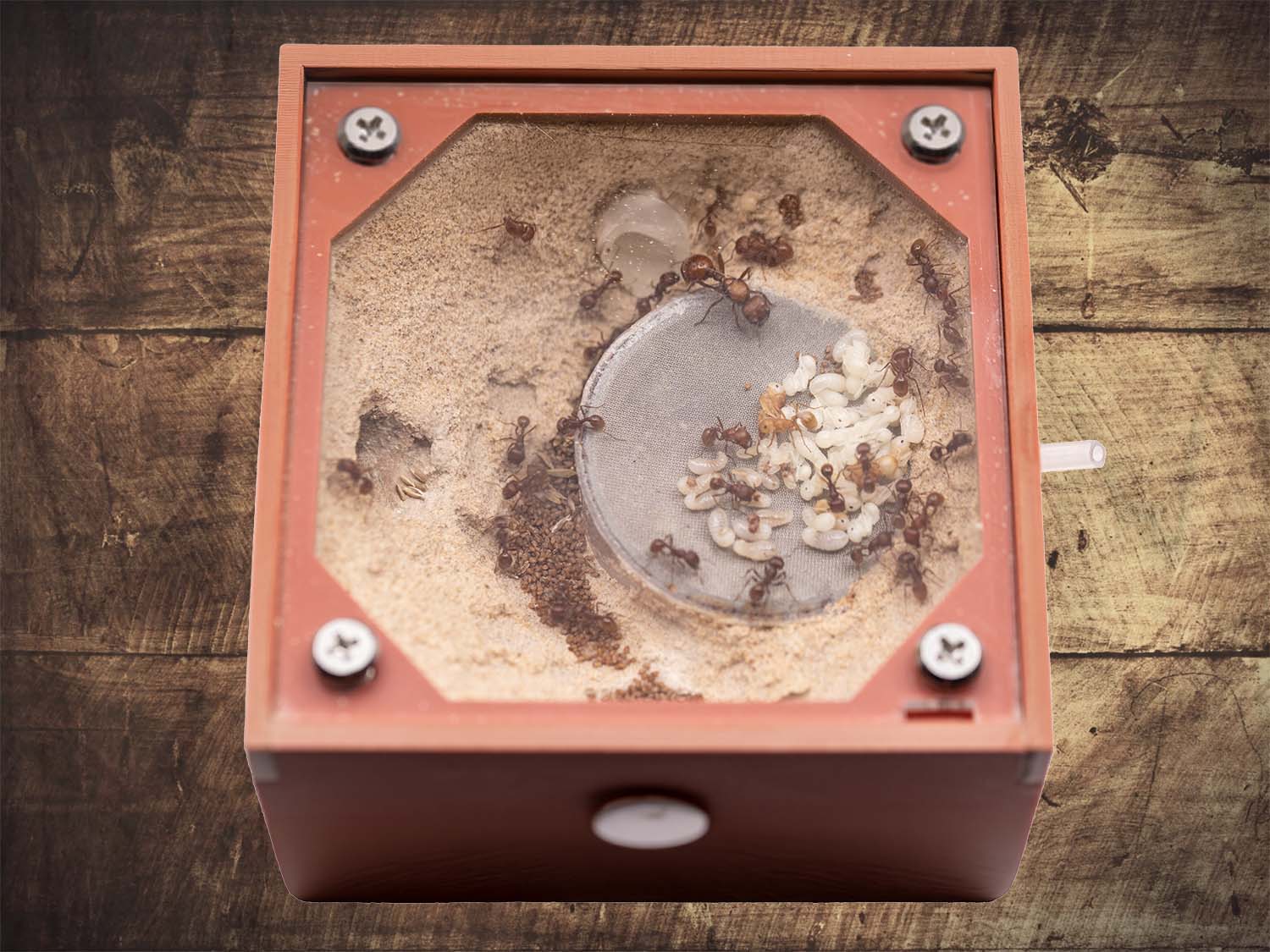
Tell someone you keep ants and you’ll usually get one of two reactions: a polite smile, or a wrinkled nose and “…on purpose?” We get it. After all, for most people, ants are the trail across the kitchen counter. But ants as pets are one of the most fascinating, low-maintenance and educational hobbies we know. Families, teens and curious adults who never thought they’d be “bug people” are getting hooked.
So why would anyone want to keep ants? Here’s our answer.
You’re not keeping an ant. You’re keeping a society.
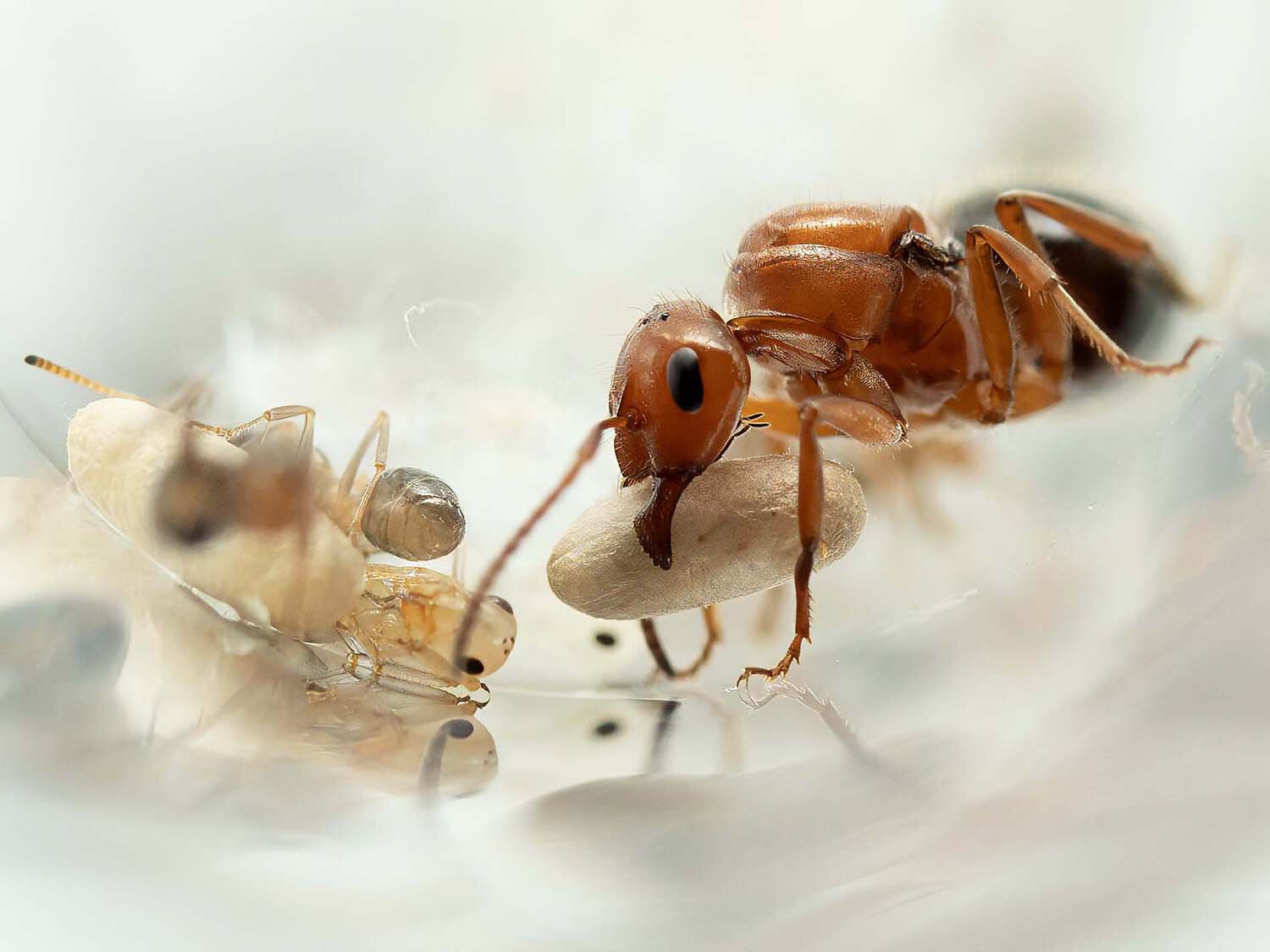
A pet ant colony isn’t a jar of random bugs. Instead, every colony starts with a single queen. She settles in, lays her first eggs and raises her first tiny workers by herself. From then on, her daughters run everything. They nurse the young, haul food, guard the entrance and even keep a separate trash pile away from the nest.
Watch long enough and you’ll see each colony’s personality. For example, harvester ants stock granaries with seeds. Honeypot ants turn some workers into living storage tanks, swollen with nectar. Carpenter ants have big-headed major workers that guard the entrance. In fact, most people have a “wait, they do that?” moment in the first week.
Why ants make great pets for families
Quiet & clean
No barking, no litter box, no walks. A healthy colony doesn’t smell.
Shelf-sized
A starter colony fits on a desk or bookshelf, so it’s apartment- and dorm-friendly.
Low cost
No vet bills. Food costs a few dollars in seeds, insects and sugar water.
Long-lived
With good care, a colony often lives 3 to 5 years. A real long-term pet, not a summer project.
The real payoff is what kids learn. Ants teach responsibility gently. Feeding and watering take a few minutes a couple of times a week, and a well-set-up colony is fine through a busy week. They also put biology, ecology and the scientific method on the desk. For example, keep a journal, count workers each month, offer two foods and see which one they choose. That’s real science, done at home.
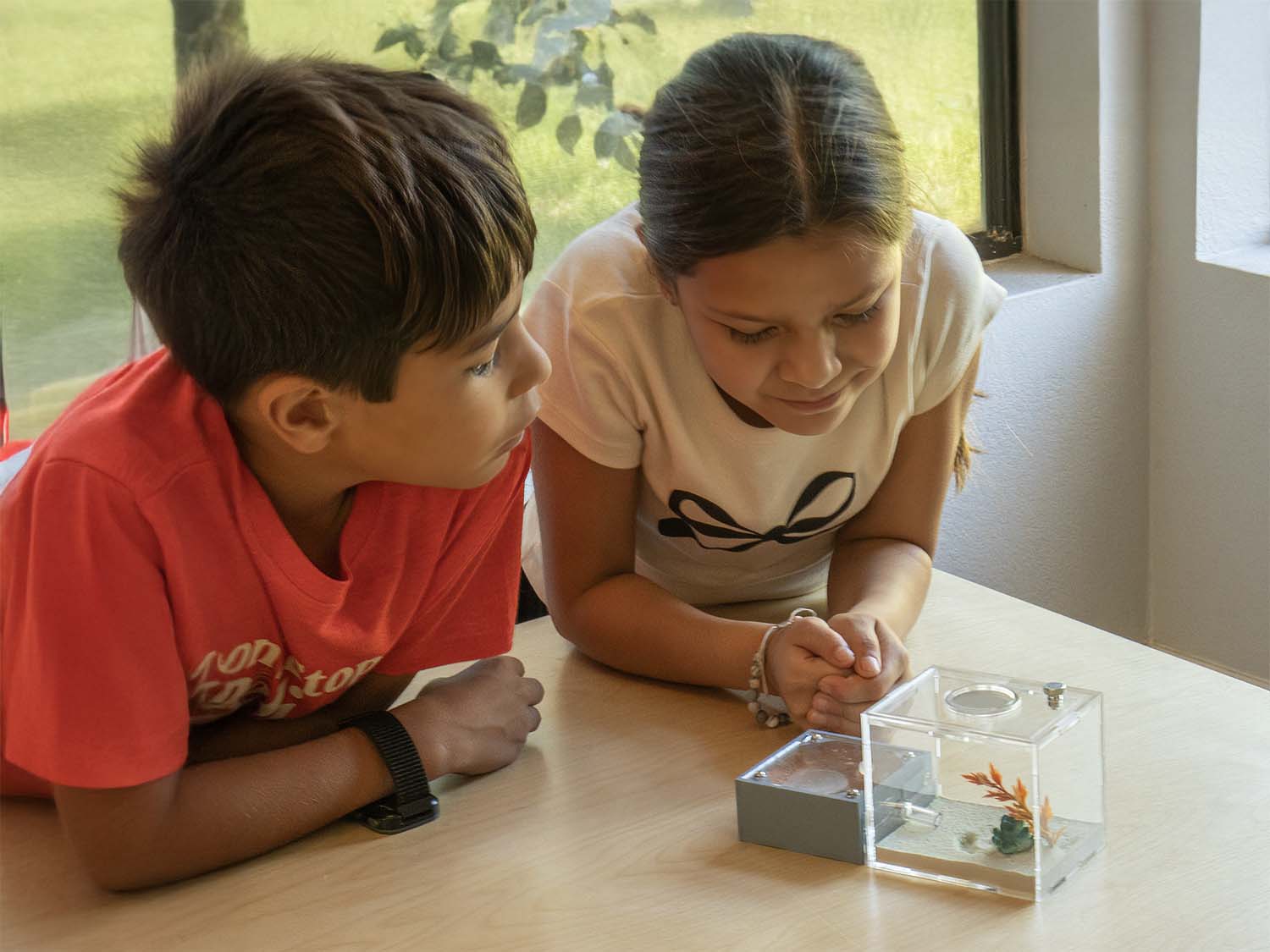
For teens, an ant colony is a natural science fair project, a screen-free hobby and a way into a growing online community of keepers who trade tips, photos and colony updates.
Why adults get hooked, too
Plenty of our customers don’t have kids at all. That’s because watching a colony is calming. Think slow TV, but alive. And the milestones keep coming: the first workers, the first time they find the outworld, the day you realize you’ve lost count. You built this, from one queen in a test tube, and you get to watch it grow for years. (Still not convinced? Read Why Keep Ants? Give Me 5 Minutes and You’ll See Why.)
“But…” The questions every parent asks
For the extra-cautious parent, we keep an AntVac next to every colony. It’s a small rechargeable vacuum that gently picks up a stray ant so you can drop it right back in the outworld, no squishing and no chasing it across the desk. It also makes cleaning the colony’s trash pile a 30-second job, so it earns its spot even if nobody ever gets out.
Is it fair to the ants, and what does it cost?
Is it legal to keep ants as pets in the USA?
Yes, with a few rules. Shipping ants across state lines is regulated by the USDA’s Animal and Plant Health Inspection Service (APHIS). These rules exist because invasive ants can harm crops and native ecosystems. What that means depends on the species:
- Most of our species need a permit. We hold USDA permits for each of them and ship only to states where the species is native and covered by our permit. Every ant product page lists the states we can ship to.
- One species is unregulated. The Western Harvester Ant (Pogonomyrmex occidentalis) is on the USDA’s list of exceptions, so it doesn’t need a federal permit. We can ship it to every contiguous state except Florida, which doesn’t allow it.
- We ship live ants only within the contiguous United States.
- You don’t need a permit to buy from us. For permitted species, we include a copy of our permit for your state with your colony.
How to get started
- Pick a beginner species that ships to your state. Western Harvester Ants are a hardy, popular first colony, and they ship to every contiguous state except Florida. Browse all our ants to see what ships to you.
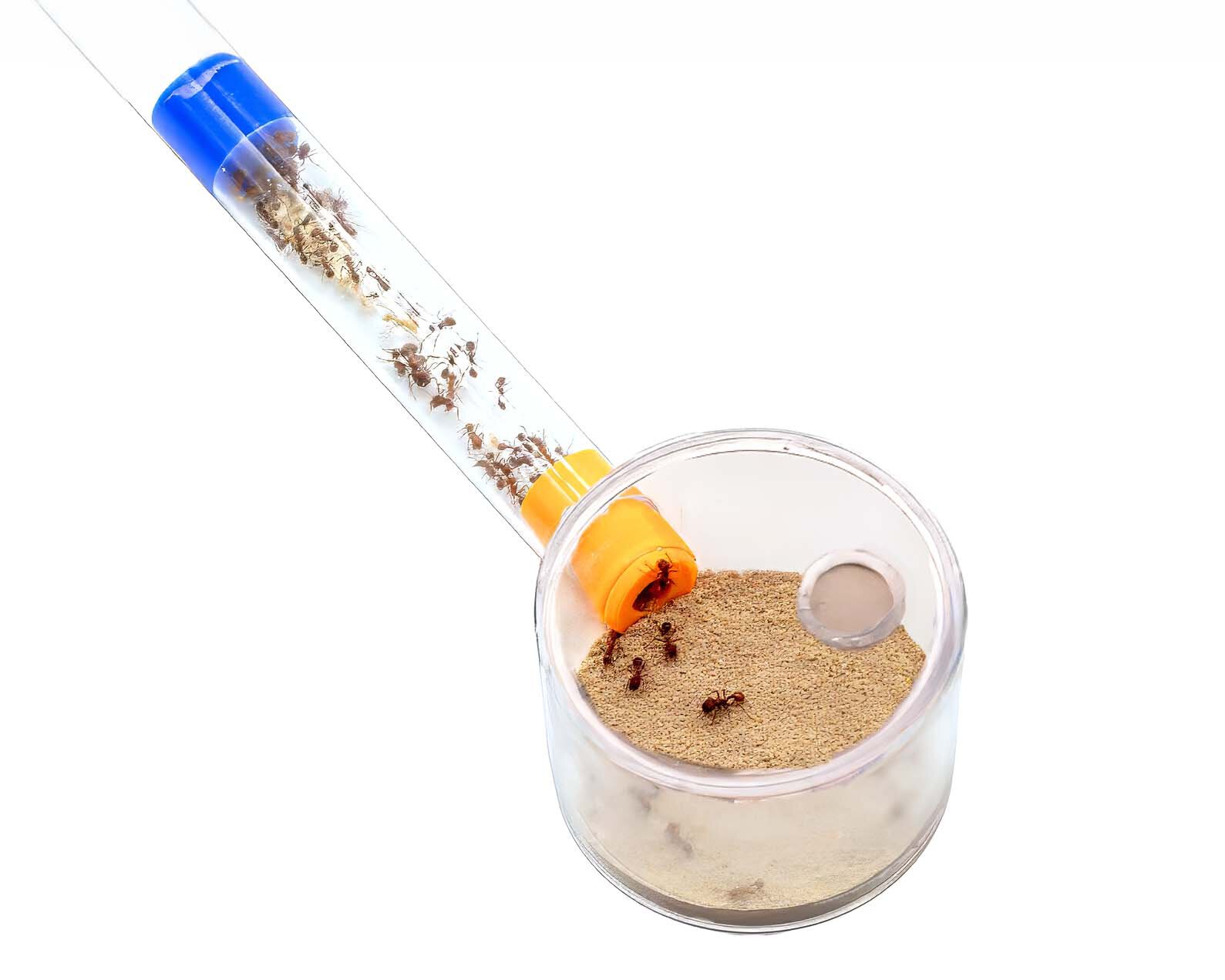
- Start small. A young colony does best in a snug test tube setup. A big habitat too early is one of the most common beginner mistakes.
- Grow into it. Our Harvester Ant Starter Kit takes you from the test tube stage to a full nest with an outworld. When the colony is ready for more room, AntQuarters nests connect as it expands.
- Learn the basics. Read Ant Care Basics before your colony arrives. Our Live Arrival Guarantee covers your queen on the trip.
One tip: skip the gel “ant farms” that ship a tube of workers with no queen. Without a queen, there’s no colony, so those ants live a few weeks and that’s it. A real colony starts with a queen.
Ready to meet your first colony?
Hand-picked queen ants for sale, shipped legally from our home base in Arizona, plus everything you need to raise them.
So the next time someone asks, “You keep ants?”, you’ll have an answer. Yes, and once you’ve watched a single queen grow into a busy little city, you’ll understand why.