Description
Overview
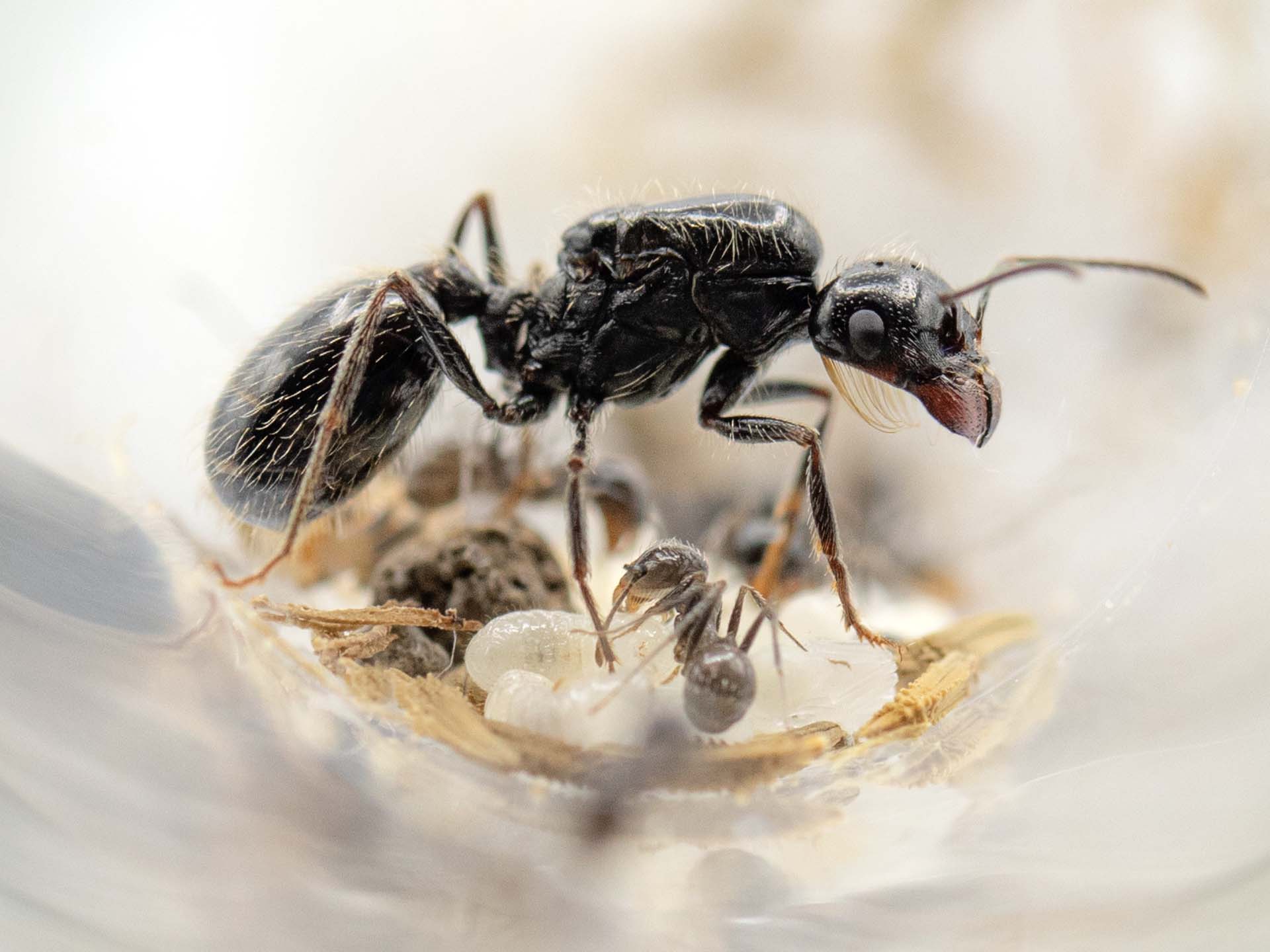
Veromessor are true harvester ants native to the arid and semi-arid regions of the southwestern United States and northern Mexico. Found across California, Nevada, and Arizona, they inhabit open desert flats and sandy washes where seeds are plentiful year-round. Solid black and highly active, these ants are best known for their organized foraging columns and their impressive ability to harvest, carry, and process seeds back at the nest. Queens range from 9–12mm; workers range from 3–6mm, with larger major workers reaching up to 8mm.
Difficulty Level
Beginner. Veromessor are a hardy, forgiving genus that do well in a wide range of setups. Their main requirement is consistent warmth — get that right and they tend to thrive.
Temperament
Veromessor are calm and focused — rarely aggressive toward their keeper, and fully absorbed in the business of foraging and seed processing. They have no functional sting. Workers move quickly and purposefully, and watching their foraging columns in action is one of the highlights of keeping this genus. They are skilled climbers and escape-prone, so barrier maintenance is essential.
Feeding
Veromessor are true granivores — seeds are their primary food source. Workers carry seeds back to the nest, hull them, and process them into a paste that feeds the whole colony. Keep a seed supply available at all times.
Recommended seeds: Kentucky bluegrass, dandelion, and sand dropseed. These seeds are safe, nutritious, and rarely sprout even in humid setups.
Protein can be offered occasionally — fruit flies, crickets, mealworms, or roaches — but Veromessor do not depend on it and will often ignore it. Always remove uneaten protein within 24 hours to prevent mold.
Liquid sugar should be available at all times. A liquid feeder works well and prevents drowning. Sunburst Ant Nectar is a great ready-to-use option.
Ant Farm (Habitat)
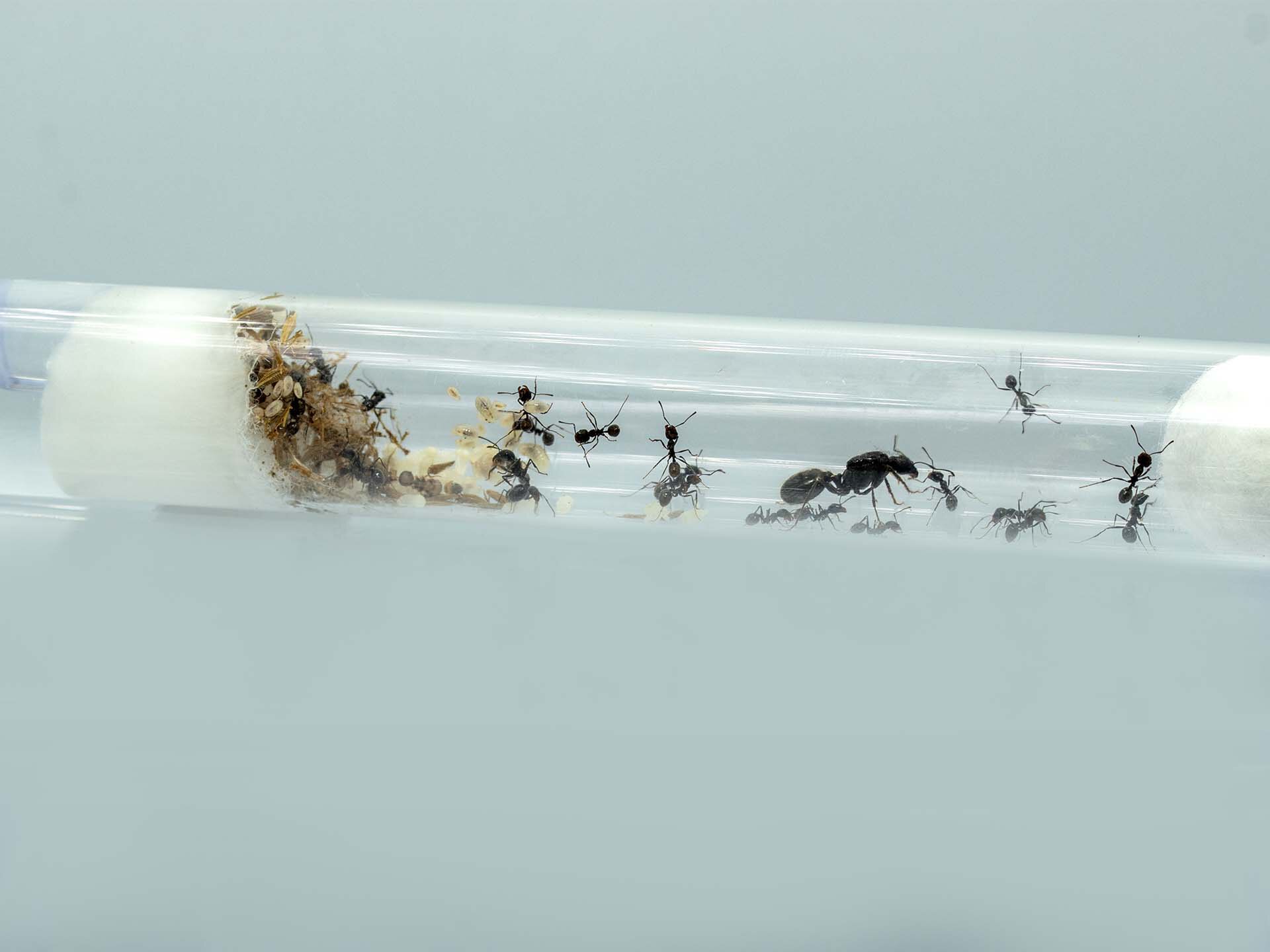
Start new colonies in a test tube setup until the first workers have emerged and the colony is established. From there, Veromessor do exceptionally well in Bamboo Tube Nests — highly recommended for this genus. The natural material suits them well and encourages their instinct to pack and organize seeds.
Upgrade to a larger nest when workers are filling about half the available space. Avoid overcrowding — a tight nest can stress the colony and slow growth.
Make sure any water source in the outworld is ant-safe. Open water is a drowning hazard; a water tube with cotton or a secured reservoir is strongly preferred. Apply Fluon to outworld walls and reapply monthly to prevent escapes.
Growth
Queens are fully claustral and will not need food during founding — they raise their first workers entirely on internal reserves. First workers typically appear within 6–8 weeks. From egg to worker takes approximately 28–35 days depending on temperature.
Veromessor grow steadily and can reach 500 workers within the first year with proper heat and a consistent seed supply. Major workers begin appearing once the colony reaches a few dozen workers and add an impressive visual element to the colony. Mature colonies can reach 10,000–15,000 workers.
No diapause is required. With consistent warmth, Veromessor remain active and grow year-round.
Temperature
Maintain a nest temperature of 78–85°F (25–29°C). Heat is essential — colonies kept at the cooler end of this range will grow slowly, while colonies kept toward the warmer end will develop noticeably faster. A heat cable is the easiest way to maintain a consistent temperature.
No diapause is required. Keep temperatures stable year-round for continuous colony growth.
Humidity
Veromessor tolerate a wide range of humidity and do well even in higher-humidity setups. If you notice seeds sprouting in the nest, the issue is not humidity itself — it’s seed selection. Stick with Kentucky bluegrass, dandelion, and sand dropseed and sprouting is rarely a problem regardless of moisture levels.
Common Challenges
- Seed sprouting — Switch away from chia seeds. Kentucky bluegrass, dandelion, and sand dropseed rarely sprout.
- Escapes — Veromessor are fast and determined climbers. Apply Fluon to outworld walls and reapply monthly.
- Drowning — Always use a secured water source. Open dishes or improperly plugged test tubes are a common hazard.
- Brood loss during founding — Keep the founding queen undisturbed and in a dark, warm spot. Stress during this phase can cause the queen to eat her eggs.
- Overcrowding — Watch nest fill level and upgrade proactively. A cramped nest slows growth and increases stress.
- Protein mold — Remove any uneaten insect prey within 24 hours. Mold spreads quickly and can harm brood.
Shipping Info
We ship Monday through Wednesday to ensure your ants don’t sit in a carrier facility over the weekend. Orders placed after Wednesday ship the following Monday.
On your shipping day, you’ll receive an email in the afternoon with tracking information.
Temperature protection:
- Cold pack: Included when the temperature at our location in Tempe, AZ exceeds 100°F.
- Heat pack: Included when the temperature at your destination is below 50°F.
- Weather hold: If the destination forecast drops below 35°F, we’ll hold your order and ship when conditions improve. We’ll contact you if this applies to
your order.
Live Arrival Guarantee
giving you confidence in your ant-keeping journey. See our live arrival policy for
requirements and instructions.

Juleuz (verified owner) –
I bought the black desert harvester ant species as a beginner ant keeper and when it arrived it is kept in a very safe container with foliage that kept the ants cushioned and safe during the trip. They arrived in amazing condition and the queen is actively laying eggs. They are alive and already well fed since to this day.
Upvote if this was helpful (0) Downvote if this was not helpful (0) Watch Unwatch Flag for removal