Description
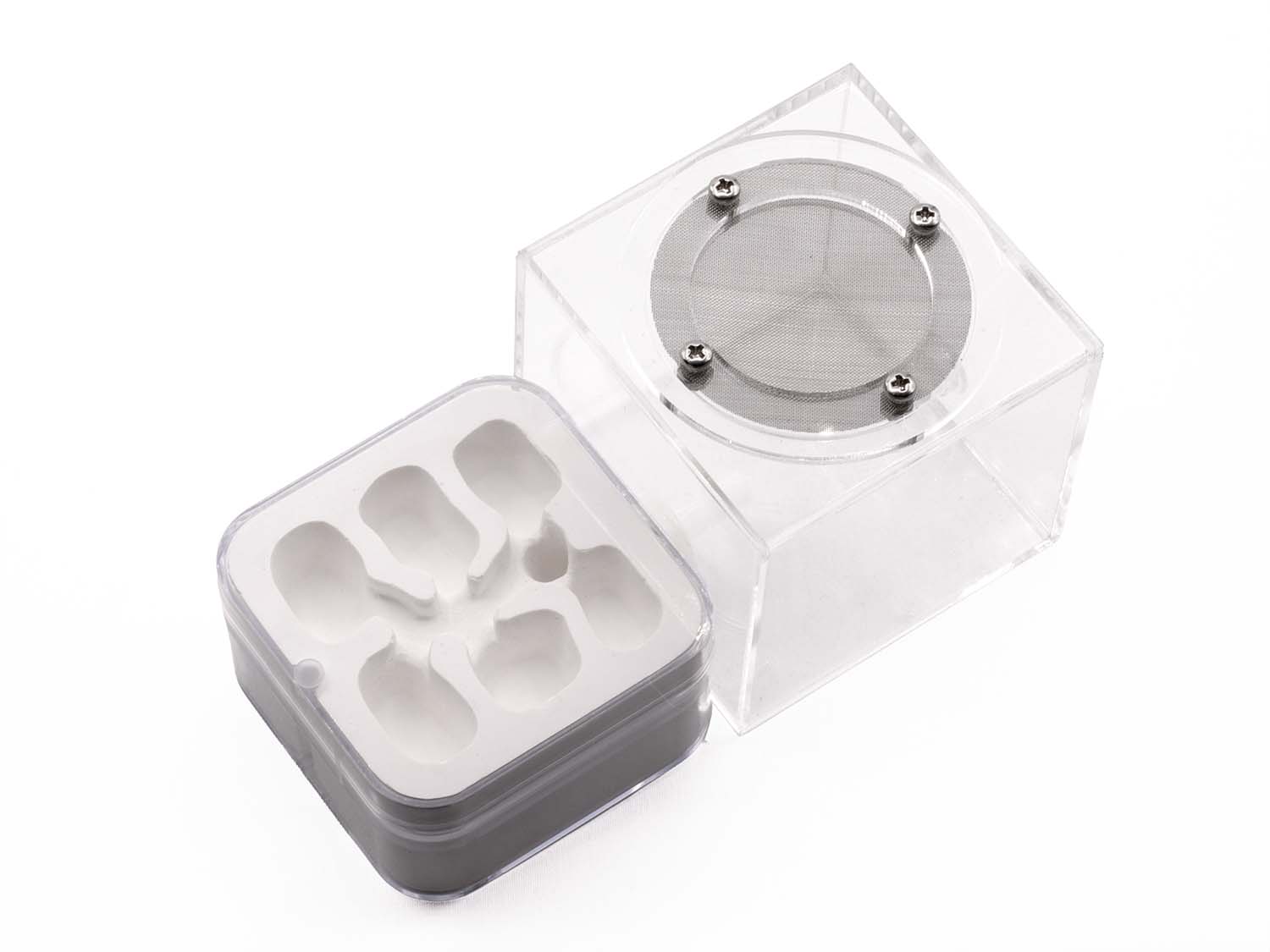
The PocketNest is a compact ant nest for small colonies that’s easy to get started with. It gives a young colony everything it needs: a set of clean-cut chambers to live in, plus an attached outworld where your ants forage, feed, and drink.
The chambers are cut to mimic the tight, cozy spaces that many ground-nesting ants naturally look for, so a founding queen and her first workers settle in quickly. The top lifts off if you ever need to get the colony out quickly.
- Attached outworld: about 2.75 × 2.75 × 2.75 in (7 × 7 × 7 cm)
- Nesting area: about 2.75 × 2.75 × 1.2 in (7 × 7 × 3 cm)
- Includes: blunt-tipped syringe for adding water
- Material: plaster
- Best for: small and growing colonies
- Features: clean-cut chambers for easy viewing · mesh lid for ventilation · raised rim around the lid to help prevent escapes
- Removable top: for getting the colony out quickly in an emergency
Adding water
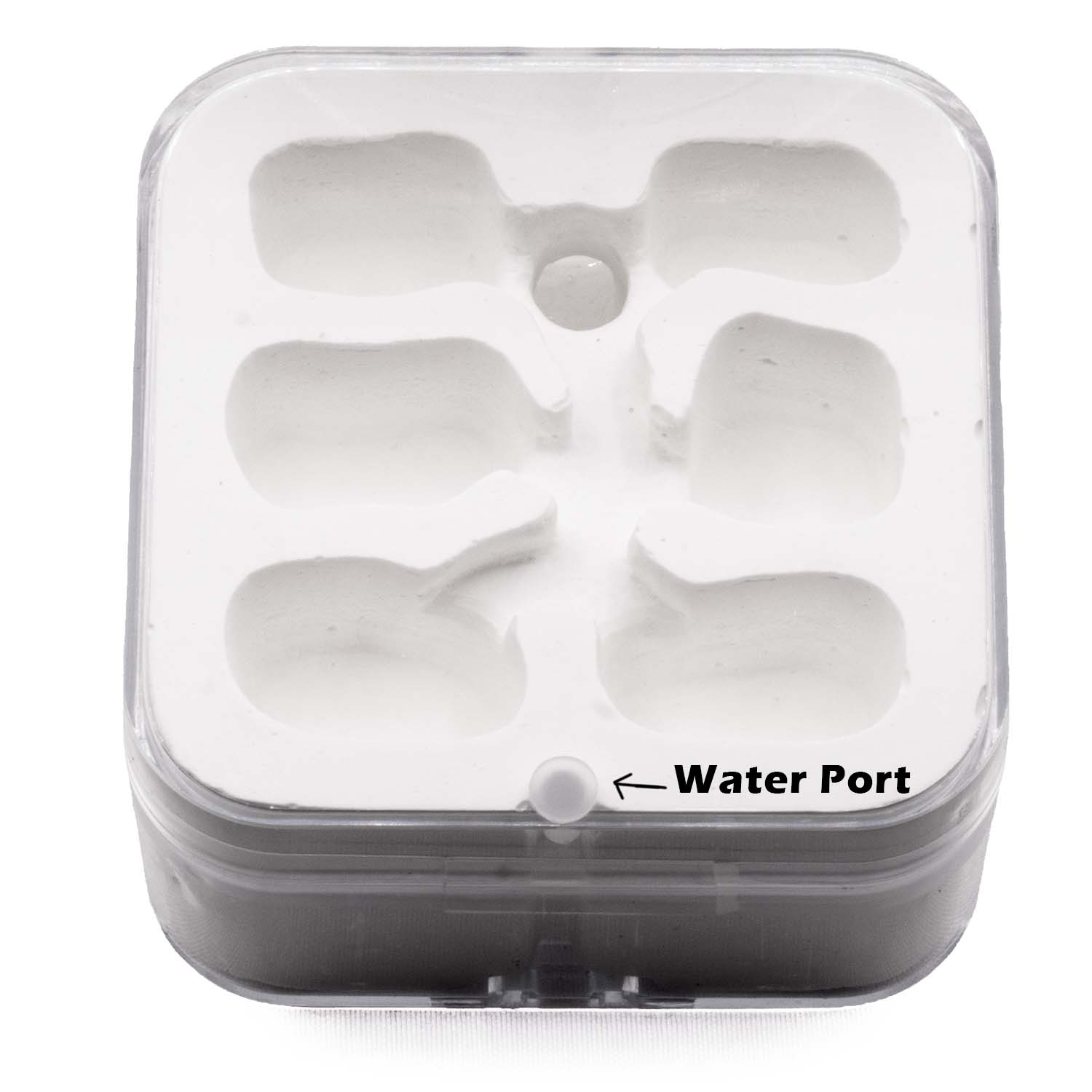
The PocketNest stays humid through a water port. To hydrate it, pull out the plug, fit the tip of the included blunt-tipped syringe into the port, and add a small amount of water. The plaster soaks it up and releases the moisture slowly into the chambers. Start with a little, watch how the nest responds over a day or two, and top up as needed — it’s easier to add more water than to dry out a soggy nest.
A note on the material
The PocketNest is made from plaster, which is lighter and softer than the gypsum cement we use in most of our other nests. That keeps it affordable and easy to work with, but it also means the walls scratch and wear more easily. Handle it gently, and keep it to less destructive species. It’s not the right home for harvester ants (Pogonomyrmex, Messor) or highly destructive diggers like Pheidole (big-headed ants) — colonies like those will chew and excavate a plaster nest apart. Camponotus (carpenter ants) do just fine in it.
FAQ
Which ants is the PocketNest good for? Small and growing colonies of less destructive species — the kind of ants that like snug, dark chambers. Camponotus (carpenter ants) do well in it. Avoid harvester ants, and highly destructive species like Solenopsis and Pheidole, since they’ll wear down the softer plaster. Also, avoid ants with queens over 14mm because the chambers are too small for them.
How is it different from your other nests? It’s made from plaster instead of gypsum cement. That makes it lighter, but also softer so it’s best for smaller, less destructive colonies.
How do I add water? Remove the plug from the water port, insert the included blunt-tipped syringe, and add a small amount of water. Refill when the nest starts to look dry. (See “Adding water” above for more). Pay attention to the humidity preference of your species. For example, carpenter ants like it to be drier
How often will I need to water it? It depends on your room’s temperature and humidity. Check every few days at first to learn your nest’s rhythm, then settle into a routine. Add a little at a time rather than flooding it.
When should I move my colony in? Wait until the colony is big enough to fill about a quarter of the nest’s chamber space. Ant sizes vary too much for a worker count to mean much — go by how much of the nest the colony would take up. Moving in too early leaves a small colony rattling around in space it can’t defend or keep humid. Connect the founding tube to the nest and let the ants move themselves over on their own schedule.
Does it come with an outworld? Yes. An outworld is attached to the nest, so your ants have space to forage, feed, and drink right out of the box — no separate outworld to buy. You can still connect a larger one later as the colony grows.
Moises Alvarez (verified owner) –
This is a nice and clean set up. For a young ant colony. I used mine for my campo frgaillis ants. They will will fill it up quickly because of their size but great quality for the price. Note with heating cable lots of condensation will build up and block your view of nest. Depending on the hydration of the nest.
Upvote if this was helpful (0) Downvote if this was not helpful (0) Watch Unwatch Flag for removal