
Description
Overview
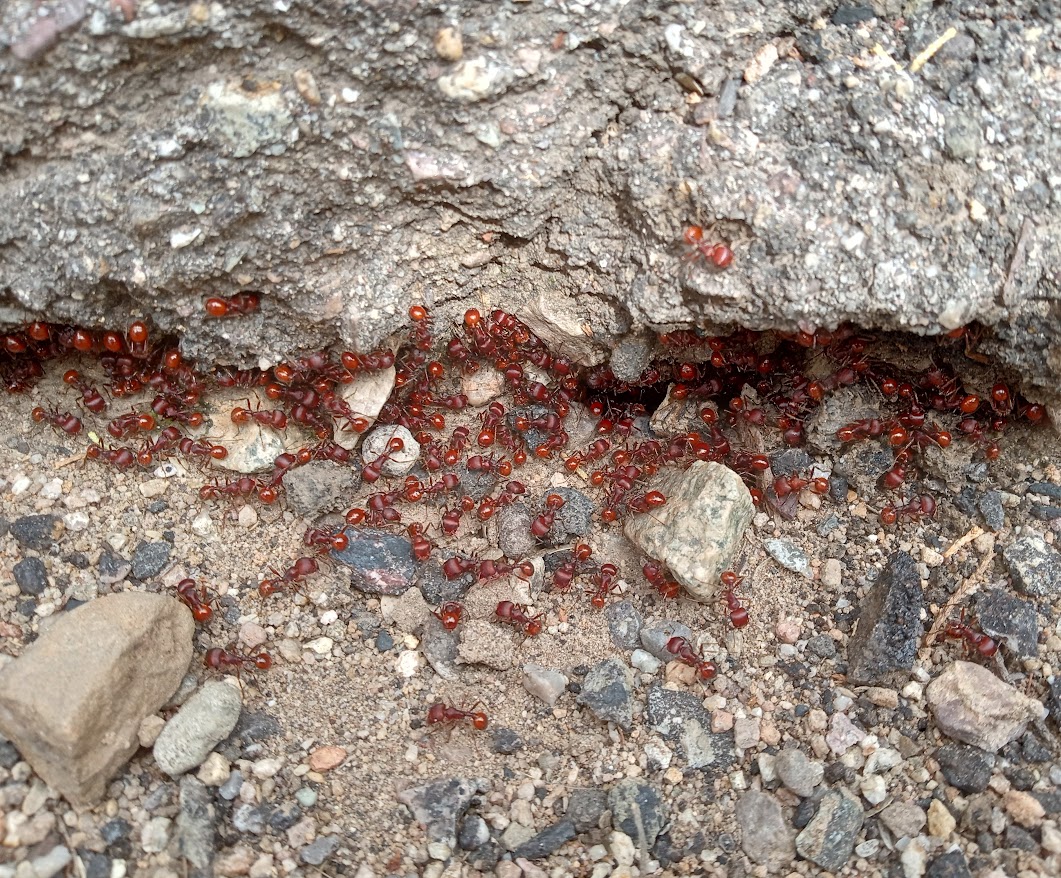
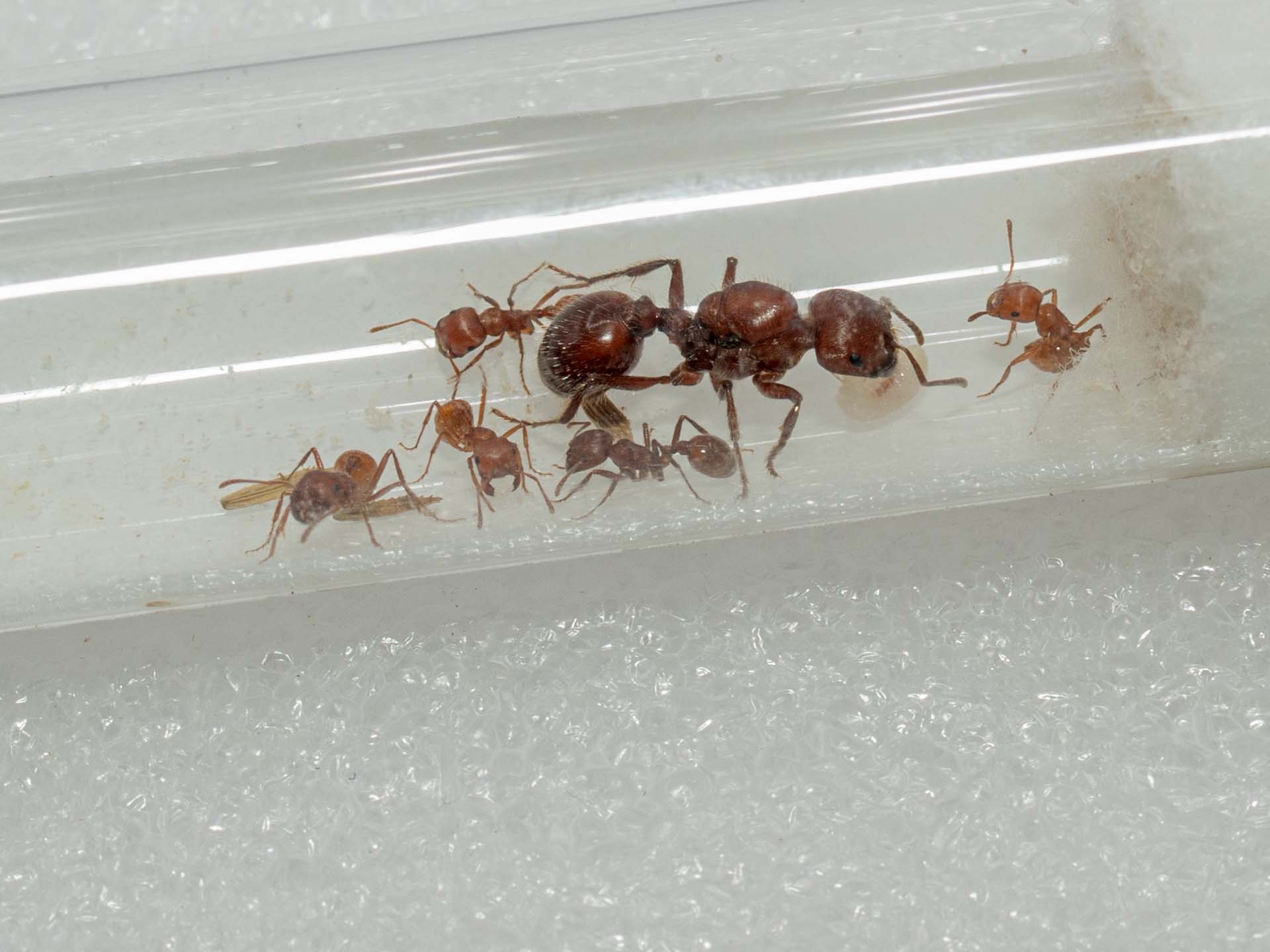
Pogonomyrmex barbatus — the red harvester ant — is one of the most recognizable ant species in North America. Workers and queen are a rich, vivid red, which gives this species its common name and makes a mature colony genuinely striking to look at.
Native to the grasslands and desert scrub of the Southwestern US and northern Mexico, P. barbatus builds large crater-shaped mounds surrounded by cleared foraging areas. Workers are active and organized — seed trails form quickly and the colony runs a tight operation hauling material back to the nest. In an enclosure, that means constant visible activity: foraging, seed processing, and brood care going on at the same time.
Colonies grow into the tens of thousands at maturity. The sting is real and notably strong — treat these ants with the same respect you’d give any stinging insect and you’ll have no problems. Day-to-day keeping is straightforward.
Difficulty Level
Beginner
Pogonomyrmex are a forgiving genus that tolerates minor care mistakes well. Their needs are straightforward — consistent heat, a seed-based diet, and an appropriate nest — and they establish reliably from a mated queen.
Unlike some Pogonomyrmex species, P. barbatus are able to climb glass and plastic surfaces. To prevent escapes, it is necessary to apply a thin layer of fluon.
The sting is worth knowing about and respecting, but it doesn’t make them difficult to keep. Get the temperature right and these ants take care of the rest.
Temperament
Workers are focused on their tasks and generally easy to work around at the outworld level. They don’t go looking for trouble, but they will defend the nest firmly when disturbed — and their sting is strong. It’s painful and lingers, so avoid reaching into the nest and don’t handle workers directly.
Standard outworld maintenance — refreshing seeds, swapping protein — can be done without incident. Use test tube adapters and tubing for colony transfers rather than opening the nest.
Feeding
Seeds (Primary — replaces nectar)
Seeds are the foundation of the Pogonomyrmex diet and serve as both food and energy source. A separate sugar supplement is not needed. Good options include Kentucky bluegrass, dandelion seeds, chia, sand dropseed, canary seed, and millet. Workers carry seeds into the nest, grind them down, and store ant bread in dedicated chambers. Check 2–3 times per week and remove any seeds that have sprouted or started to mold.
Protein
Offer small insects a few times per week: fruit flies, small cricket pieces, or mealworm pieces. Protein supports larvae and queen health and accelerates colony growth, but a well-seeded colony can do fine without it. It’s a supplement, not a staple.
What to avoid
Large oily seeds in young colonies — they mold before workers can process them. Any food left to accumulate and rot in the outworld. Overloading the nest with seeds faster than the colony can manage them.
Ant Farm (Habitat)
Bambo tube nests are an excellent choice for Pogonomyrmex — they provide natural dimensions, good passive moisture regulation, and are well-suited to both founding colonies and growing ones. Standard test tubes work for founding and early stages.
Recommended setups:
- Bambo tube nests (preferred)
- Test tubes for founding
- Any acrylic or naturalistic design with a visible outworld for seed cleanup and foraging observation
Avoid:
- Gel-based or novelty ant farms
- Setups not designed for queen colonies
Move from founding setup to a formicarium when the colony reaches 10–15 workers.
Growth
Pogonomyrmex respond strongly to temperature. Consistent heat is the primary driver of brood development. They develop eggs to workers in 25–35 days under optimal conditions. First-year colonies typically range from a few dozen to several hundred workers; established colonies can reach thousands.
Temperature
Heat is essential. This species requires sustained warmth to develop brood, and development slows substantially below 75°F.
- Optimal range: 80–95°F with a heat gradient
- Brood incubation: Keep part of the nest at or above 88–90°F
- Gradient: Allow cooler zones (low 80s) so workers can self-regulate
- Daily heating: 10–12 hours of active heat works well
A heat cable or mat on one side of the setup creates the gradient. Never place heat directly beside water sources — condensation can flood tubes or nest chambers.
Humidity
Although Pogonomyrmex live in dry environments in the wild, captive colonies do well with decent humidity in the nest. The key concern isn’t moisture itself — it’s mold in seed storage chambers. Good airflow prevents that.
Bambo tube nests handle this naturally by passively regulating moisture without becoming waterlogged. Founding chambers can be kept quite humid to support early brood. As the colony scales up and seed storage becomes active, ensure the nest has adequate ventilation.
Common Challenges
| Problem | Likely Cause | Fix |
|---|---|---|
| Seeds molding in the nest | Poor ventilation or excessive moisture | Improve airflow; remove moldy seeds promptly |
| Seeds sprouting | Not being processed fast enough | Remove sprouted seeds 2–3x per week |
| Brood not developing | Temperature too low | Raise heat; target 88–92°F in the nest |
| Queen eating eggs | Dehydration or temperature stress | Check water access; verify heat |
| Workers ignoring protein | Seed supply is abundant | Temporarily reduce seeds to shift interest |
Shipping Info
We ship Monday through Wednesday to ensure your ants don’t sit in a carrier facility over the weekend. Orders placed after Wednesday ship the following Monday.
On your shipping day, you’ll receive an email in the afternoon with tracking information.
Temperature protection:
- Cold pack: Included when the temperature at our location in Tempe, AZ exceeds 100°F.
- Heat pack: Included when the temperature at your destination is below 50°F.
- Weather hold: If the destination forecast drops below 35°F, we’ll hold your order and ship when conditions improve. We’ll contact you if this applies to
your order.
Live Arrival Guarantee
giving you confidence in your ant-keeping journey. See our live arrival policy for
requirements and instructions.
djsalin (verified owner) –
I recently purchased a live queen ant and couldn’t be more pleased with my experience. The queen looks healthy and vibrant, and she came with a small group of workers already, which was a great bonus!
I’ve had the colony for over two months now, and it’s been amazing to watch them thrive. After applying a little heat, their population started to boom. This queen is strong and healthy, as the colony is growing rapidly.
Another highlight is how well they’ve adapted to my 3D printed nest. They seem to love their home, and it’s been fascinating to observe them as they expand. If you’re thinking about starting your ant colony, I highly recommend this seller!
Upvote if this was helpful (0) Downvote if this was not helpful (0) Watch Unwatch Flag for removal
E –
Very healthy colony and definitely recommend the seller , very kind and knowledgeable.
Upvote if this was helpful (0) Downvote if this was not helpful (0) Watch Unwatch Flag for removal
Cadence Whiting –
My ants are thriving and prolific. I originally got my starter colony from them at a reptile expo and it has grown and grown since. 🙂 Very happy with this species!
Upvote if this was helpful (0) Downvote if this was not helpful (0) Watch Unwatch Flag for removal
Alston –
Nice
Upvote if this was helpful (0) Downvote if this was not helpful (0) Flag for removal
Eric –
I picked these guys up at the phx reptile expo in April and I’m super glad that I did. They’re so cool— with their blood-red color, constant activity, and low maintenance, definitely worth it! I’m stoked to see my little empire grow—long live the queen!
Upvote if this was helpful (0) Downvote if this was not helpful (0) Watch Unwatch Flag for removal